MARY CHOMENKO HINCKLEY

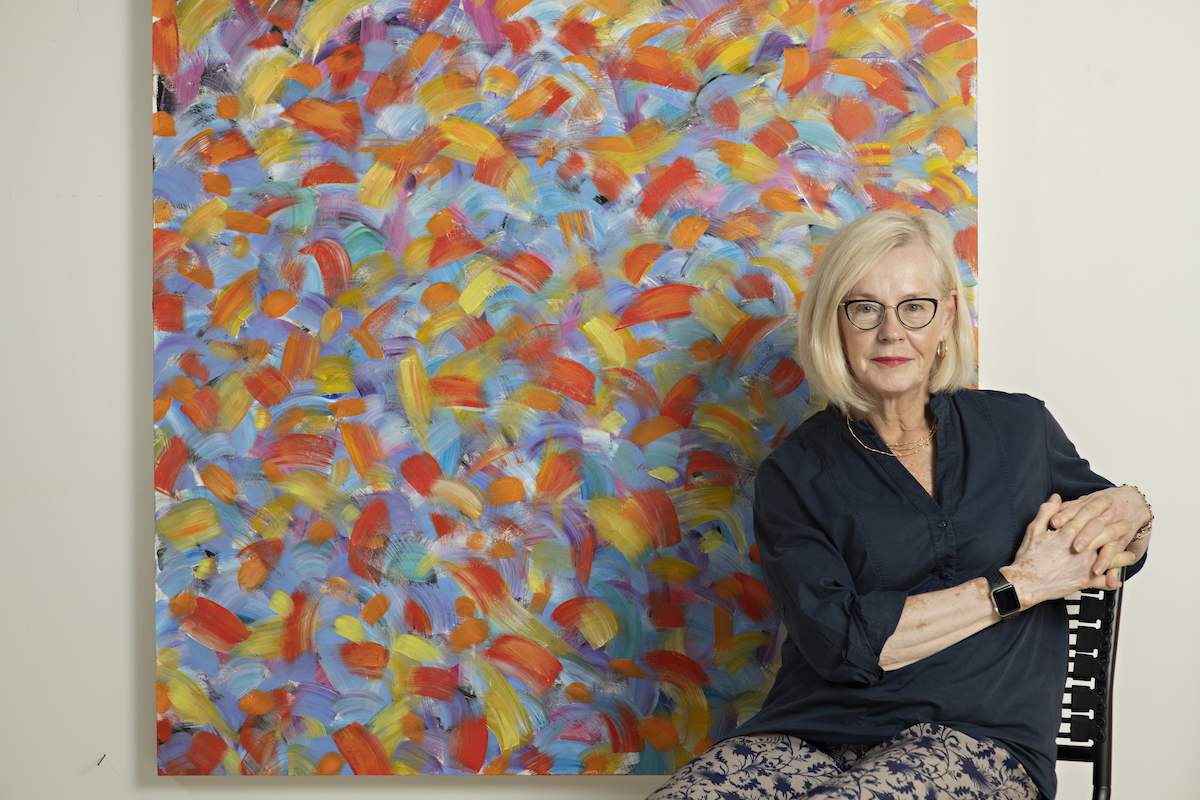
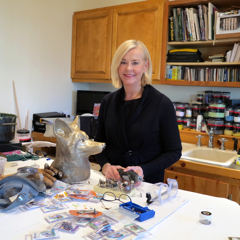
Mary Chomenko Hinckley, studio shot with Rise Up, 2021

Over the course of my career, I have worked with bronze, glass, paper and paint.  In each material relationship, there is a question that I am pushed to ask both myself and the material—“How can this interaction deepen my understanding of the larger moment?” Due to this specific exploration, my work is largely autobiographical, an improvisational conversation between environment, material and body. Each piece begins without preconception of the outcome, only with an effort to express the internal.

Currently, paint is a medium that feels closest to the body; when I paint, my hand has a direct role in constructing a visual reality. It is a poetic and liberating interaction, one that allows me to create and manipulate environments and our physical relationship to them.  While these paintings are very rooted in my own experience and material relationships, the use of color, gesture and marks all contribute to abstract pieces that are meant to engage each viewer uniquely, in the context of their own moment.

Past works were about relating the natural world to the constructed world, juxtaposing nature with geometry, architecture and language. Within the last year, my paintings have been inspired by the political and cultural environment.  These current works are heavily process-centered—a meditation and reconciliation on unprecedented divisiveness, collective suffering, climate disasters and social outrage.  Many include multistage underpaintings with obscuring squeegee over-paintings. Some are directly gestural while others are more focused on patterning and mark making. The work embodies hope and optimistic faith in the cyclical nature of time.  As events continue to unfold and overlap, they continually change the meaning and visibility of these experiences. My paintings capture this evolution, challenging the viewer to engage with the tumult of life’s moments, interactions and observations.

Mary Chomenko Hinckley   February, 2021 

I am honored to be included in ALL CLASSICAL RADIO’s Artist Anthology, a curated collection of the Pacific Northwest’s trailblazing contemporary artists–the culture bearers of this region’s thriving arts community. Read all artist profiles online now, created by leading regional authors and photographers, and pre-order the limited-edition book featuring expanded artist profiles and additional exclusive content.

“Abstracted Narratives:  New Paintings by Mary Chomenko Hinckley”

essay by Richard Speer

copyright 2022

Bronze, glass, photography, drawing, assemblage—Mary Chomenko Hinckley’s command of disparate media is so protean, it’s no wonder her career-survey monograph is entitled Material Evolution (Lucia | Marquand, 2018).  It may surprise longtime fans, therefore, that her latest migration is back to the artform that jump-started her life’s aesthetic trajectory back when she was 15 years old:  painting.  Her new works are nothing like the early, David Hockney-influenced portraits and landscapes she created in her early twenties or the mixed media she employed in undergraduate studies at Montclair State University, the School of the Museum of Fine Arts (Boston), and California College of the Arts, where she earned her M.F.A..  Instead, this fresh burst of painterly energy, dating from 2019 to the present, consists of vibrant abstractions brimming with gestures and compositional dynamism—and in every case a backstory behind the brushstrokes.  Although one could fully appreciate these works as pure abstraction, they are more than that.  They are abstracted narratives, each weaving a story with autobiographical, conceptual, or sociopolitical import.

The paintings’ titles offer clues to the deeper undercurrents flowing through them.  The latticework of blue and yellow in a highly complex work, completed earlier this year, would seem at first glance an eye-boggling étude of moiré effects in the lineage of Op Art.  Then one sees the title, Ukrainian Diaspora 2022, recognizes the colors of the Ukrainian flag, and instantly infers a geopolitical backdrop.  If one is familiar with this artist from the monograph or her long exhibition history, one knows the basics of her personal history.  In 1949, her father and mother, Savelij (Sam) and Tatjana (Tanya) Chomenko, emigrated from Ukraine to the U.S., along with her maternal grandparents and aunt and uncle, fleeing the destruction caused by World War II, the horrors of life under Stalin, and the famine of 1946/47.  Hinckley was born two years after her family arrived in America, and with Ukrainian the only language spoken at home, she did not learn English until kindergarten.  In those dark days of McCarthyism, it was hard for her not to feel an outsider, as teachers treated her with suspicion and prejudice, assuming the family must be Communist.  Her parents did not talk about the atrocities they endured in the old country, and it was not until 1977, enrolled in a summer Ukrainian Studies program at Harvard University, that she finally learned the essential truths of her heritage.  You would not necessarily infer this rich tapestry of embedded context simply from beholding Ukrainian Diaspora 2022 on the wall of a gallery or museum, but oh, what gifts these paintings bestow the more you learn about their meanings and maker.  They reward the delving-into, the repeat viewings, the introspection they inspire as one by one, like an onion’s scales, the layers of nuance peel away.  To befriend them is an act not only of familiarization but also of excavation.

The Ukraine painting offers a telling encapsulation of Hinckley’s broader modus operandi.  An inveterate traveler, keen observer, and empath possessed of indefatigable optimism and intellectual curiosity, she channels her wanderlust and emotional availability into her paintings.  Nothing is too majestic nor too intimate to be transliterated into art:  the nature of time and déjà vu; a recent expedition to Antarctica; the ups and downs of her children’s personal relationships; the changing of seasons in the Pacific Northwest; the music of Bob Dylan; the joy of snorkeling with multicolored fishes; the possibility of parallel universes; and the question of what we leave as our enduring legacies.  Many of her pieces are topical.  In Variant 1/Vaccine/ Variant 3, she addresses the frustrations and hopes of the Covid-19 lockdown.  The death of a beloved and unifying Supreme Court Justice is the subject of RBG in a Divided Country; the end of the Donald Trump presidency and the advent of a more integral era in Seeing Light; the decimated forests and acrid smoke of the summer of 2020 in Obscured by Wind and Wildfire; and the murder of George Floyd and the specter of police brutality in I Can’t Breathe.

This last piece is rare in Hinckley’s oeuvre in that its grim subject matter is echoed directly in its somber palette.  Far more often she finds the silver lining that alchemizes even the grayest cloud into cause for hope.  That orientation toward positivity manifests in a galvanizing palette of primaries and pastels; in kaleidoscopic, densely packed gestures that fit together in intricate mosaics, reminiscent of the Impressionists and Pointillists; and bold, squeegee-smeared ripples of chroma and impasto in homage to Gerhard Richter’s Abstraktes Bild series.  The compositional density is endemic to her signature style, the gestures discrete, cellular, and rhythmic.  There is a sense of mathematics and accumulationism, microcosm depicted in relation to macrocosm.  Inspired by Bachelard’s The Poetics of Space, she sometimes forces that perspective by framing two canvases together, one composition more compact, the other more spacious, as in a ratio, a scale shift analogous to logical/intuitive, explicit/implicit, left-brained/right-brained.  Such paintings may be seen as epistemological diagrams exploring perception, guiding viewers to consider physical and philosophical relationships.

Although much of her output has conceptual underpinnings, she explains that “For me, painting is very direct:  gesture, color, immediacy, and the ability to keep transforming.”  The paintings have an immediacy of surface, a luscious texture that looks powdery, velvety, luxuriant.  Together with their chromatic exuberance, these surfaces appear alive—jostling, quivering, sensual.  She thinks of them as “my autobiography of this time,” and indeed, they are dually episodic and diaristic, journalistic and editorial.  They are tools toward “metamorphosis,” she observes.  “I wind up feeling optimistic through the act of painting.”  Perhaps counterintuitively, one of her guiding artistic lights is Max Beckmann; another is Barbara Kruger—both artists who are able to transmute dark or controversial subject matter into narratives with formal elegance and a kind of sublimity.  This is Mary Chomenko Hinckley’s synthesis as well:  an abstract language deployed toward personal storytelling.  In her hands, a paintbrush confides and confesses, acrylics speak and sing, and the canvas becomes a paean to the histories and mysteries that inspire this restlessly creative, ever-searching artist.

 —Richard Speer is an American art critic, curator, and author whose reviews and essays have appeared in ARTnews, Art Papers, ArtPulse, Art Ltd., Visual Art Source, The Chicago Tribune, The Los Angeles Times, Salon, and Newsweek.  He has authored more than two-dozen books, among them “Halley/Mendini” (Mary Boone Gallery), “Eric Wert:  Still Life” (Pomegranate), “Tom Cramer:  Journey into the Fourth Dimension” (Jordan Schnitzer Museum of Art), and “The Space of Effusion:  Sam Francis in Japan” (Scheidegger & Spiess).  He has curated exhibitions in Oregon and California, including the forthcoming “Sam Francis and Japan:  Emptiness Overflowing” at the Los Angeles County Museum of Art, which will run April 9-July 19, 2023.  For more information, please visit www.richardspeer.com.

Please listen to these videos that include the paintings of Mary Chomenko Hinckley 

Close Distancing  Music by Stacey Philipps
November 2020
Performed by  Oregon Repertory Singers
Ethan Sperry, Conductor    Video editing by Stephanie Noble
Art included:
1. SILK ROAD, SAMARKAND  36”x36″
2. BLACK LIVES MATTER  36”x36”
3. SPRING OF SOCIAL DISTANCING  36″x36″
4. ONCE UPON A TIME…WITH DYLAN   60”x96″
5. OBSCURE BY WIND AND WILDFIRES  36”x72”
__________________________

A Voice  is Heard in Ramah  Music by David B. Walters
Pandemic Premieres  May 2020
Performed by the isolated voices of the Portland State Chamber Choir
assembled on SoundTrap
Directed by Ethan Sperry    Videography by Mauricio Valadrian
Art included:
April First  12”x12″
Seeing Red (1st state) 12”x12”
Requiem  30”x40″
Hopeful  48”x80″
Pandemic Raging  12”x12″
Long March  10”x10″
Thoughts of Frankenthaller  12”x16″
Once Upon A Time …With Dylan  60”x96″
__________________________

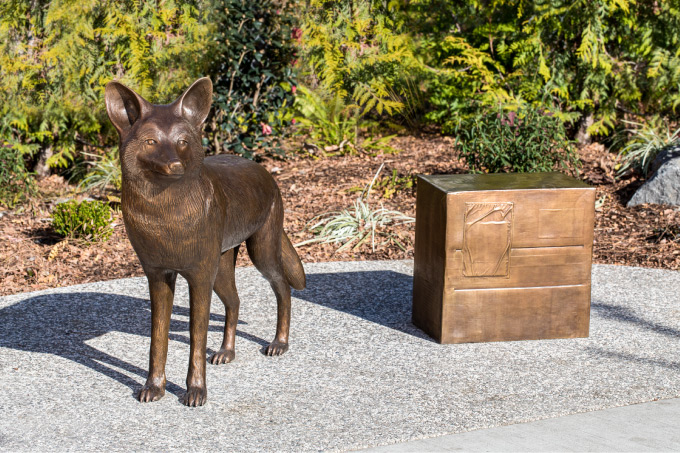
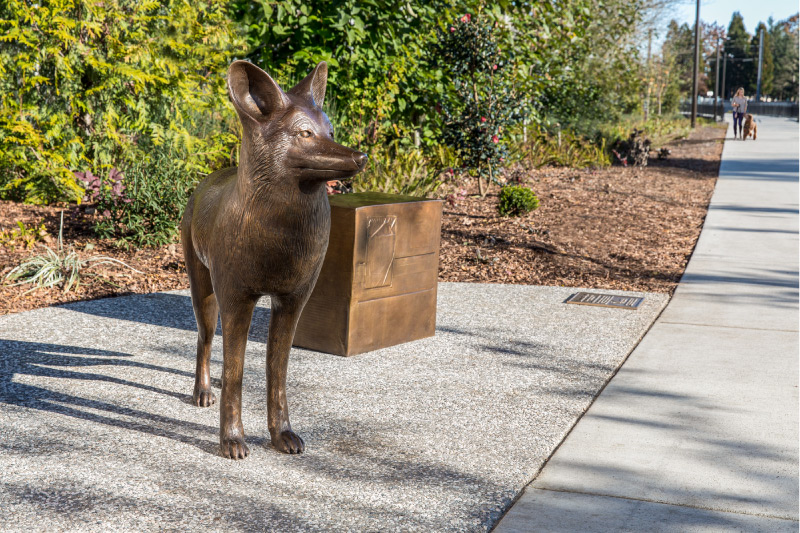
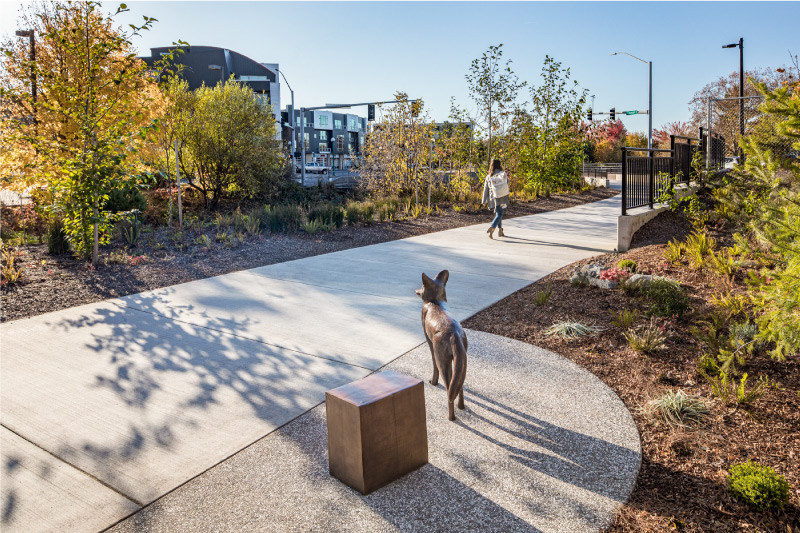
Beaverton Coyote

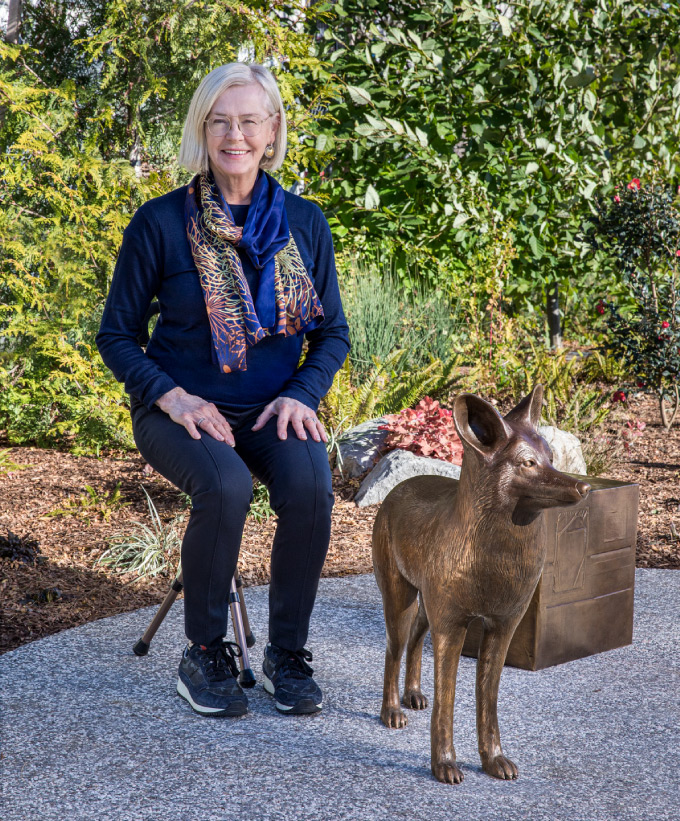
Mary Chomenko Hinckley with Beaverton Coyote

Beaverton Coyote

BEAVERTON COYOTE 1992/2019 Bronze | Commissioned by the City of Beaverton Public Art Program | Photo ©David Papazian

Beaverton Coyote was installed in August 2019 with support from the Beaverton Arts Program, Beaverton Arts Commission, and Beaverton Arts Foundation. It was cast in bronze at Maiden Foundry in Sandy Oregon.

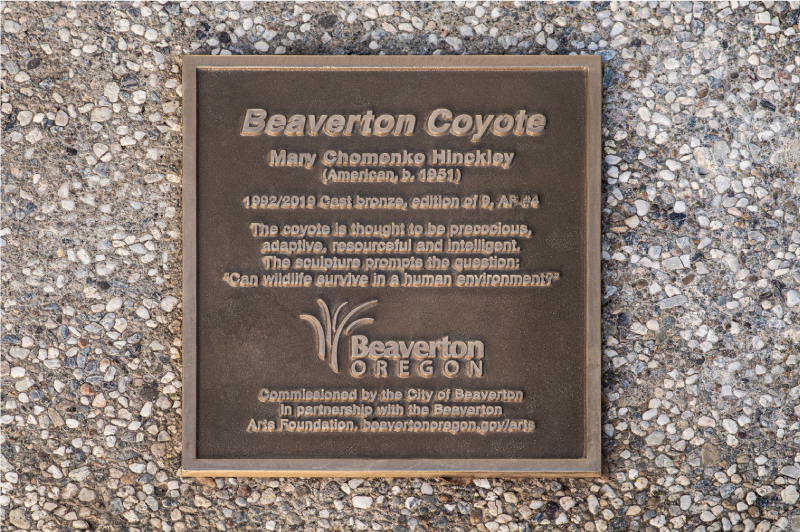
The coyote is thought to be precocious, adaptive, resourceful and intelligent. The sculpture prompts the question: “Can wildlife survive in a human environment?”

Paul J. Karlstrom in conversation with Mary Chomenko Hinckley:

Art in the Era of Artificial Intelligence

An exploration of the imposition of technology on nature and the artist’s response

OCTOBER 27, 2018, Los Angeles, CA


Paul J. Karlstrom, art historian and author, is former West Coast Regional Director of the Smithsonian Institution’s Archives of American Art. His thirty-year career with the Smithsonian focused on documenting art in America, including conducting oral history interviews with artists.

Mary Chomenko Hinckley is an American artist working in remarkably diverse media, including bronze, resin, glass and photography. The core of her art is a narrative of time, place, and the conflict between humans and the rest of creation.

More than 130 of Hinckley’s beautiful and thought-provoking works appear in:

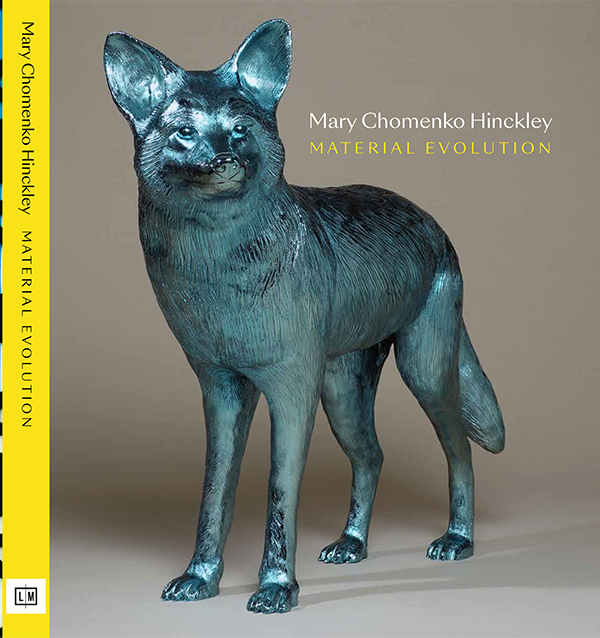
MARY CHOMENKO HINCKLEY: MATERIAL EVOLUTION
Hardcover, 208 pages, 130 images
Contributors: Leading Essay by Paul J. Karlstrom and biography by Linda Tesner. Additional essay by Ashley Stull Meyer and interview by Marit Berning. Foreword by Brian J. Ferriso

Book signing following the conversation. Click below to purchase.

Click to listen to the MARY CHOMENKO HINCKLEY KB00 interview

Mary Chinckley discusses Gates of Venice–featured at the Augen Gallery–with KB00’s radio host Eva Lake.

MARY CHOMENKO HINCKLEY

Material Evolution: Paper, Paint, Patina | Augen Gallery, Portland, OR

ARTIST STATEMENT

Mary Hinckley - Studio Portrait This exhibition coincides with the publication of my monograph MARY CHOMENKO HINCKLEY:  MATERIAL EVOLUTION that spans 40 years of artistically resolving the perceived conflict between humans and the rest of creation.  This new work continues to explore deconstruction of an image, the art making process analogous to travel and exploration and the conflict of wildlife and humans coexisting in our built world.

The Golden Winged Warbler and Scarlet Tanager are separated into three stages of being.  First a solitary portrait, then the deconstructed bird in the form of geometric ellipses made with a sampling of the bird’s colors and finally the integration of the bird and its deconstructed self.  The pieces are about seeing and then seeing more deeply.  We think the bird is yellow, grey and black but upon closer inspection it is a hundred colors.  The cloud silkscreens on glass are paired with abstract clouds.  The elements of clouds, the myriad and subtle colors and soft billowy layers are the antithesis of the cloud in the form of lines, grids, and geometry.  The cloud image is deconstructed and reconfigured as an object with similar colors and layers.

The travel photos are about discovery.  Travel is akin to making art.  There is an itinerary for the journey, along with preconceptions and information.  Once the journey begins, the revelations and discoveries begin.  I record with my camera and notes, unexpected findings, cultural, ironic, humorous and beautiful.  Similar to the process of art making, I trust experience and intuition to begin a piece and then remain open to the process and relationships unfolding.  Once that happens, I trust the process to reveal what that work will be.  For me, the exhilaration in art making is this process of engagement and discovery.

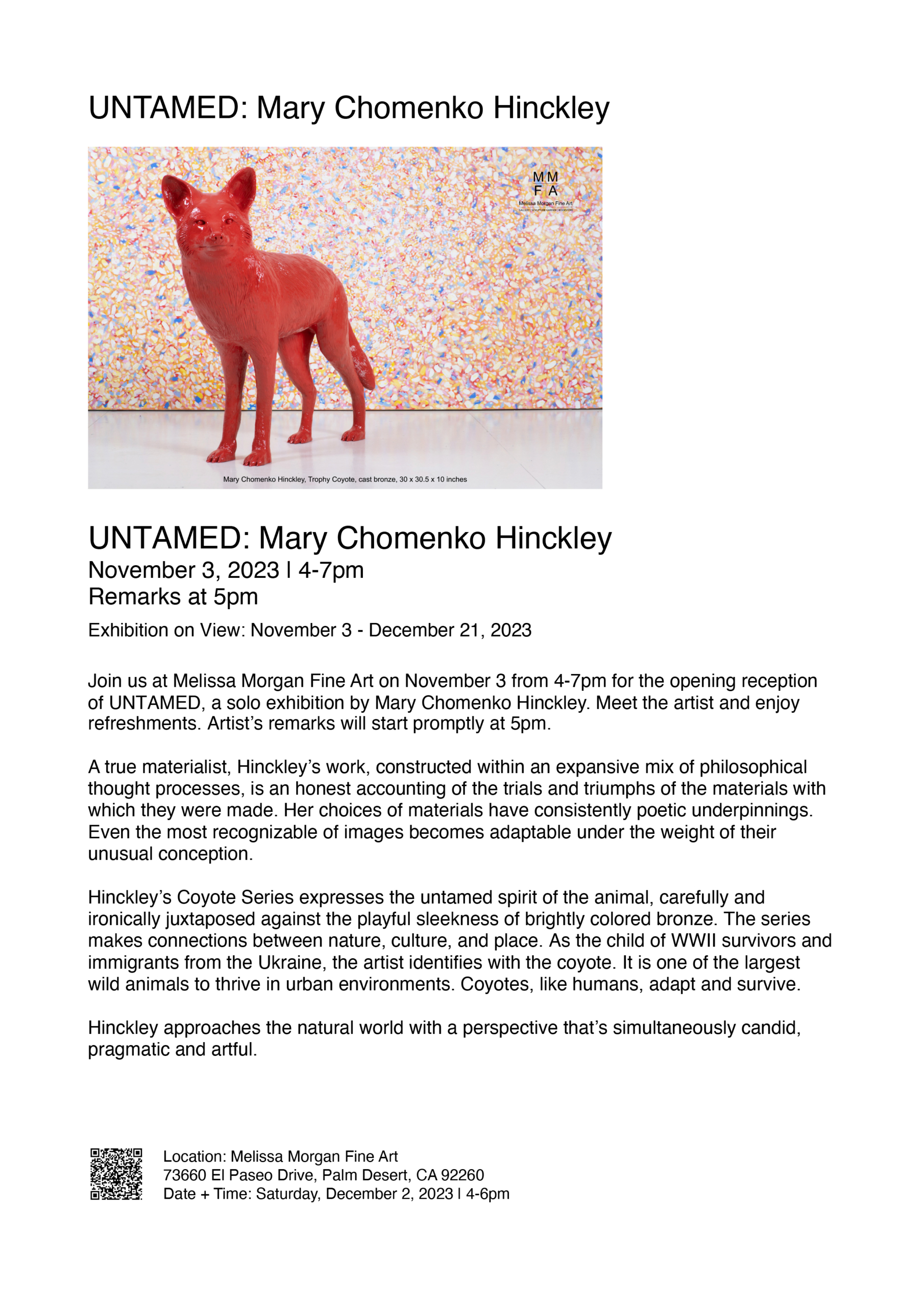
The coyote series makes connections between nature, culture, and place. In 1992, given free reign for a commission in Old Town Pasadena, I chose to place a local vermin, a coyote, next to an IBM printer box; both cast in bronze, wildlife and culture are side by side, each taking a place on the pedestrian walkway. I revisited the idea of the coyote in 2015 by casting it in bright colored resin and in bronze with precious gold and nickel patinas.  I am asking the viewer to reconsider this wild animal.  Today, in Portland these unpredictable creatures abound.   Like my coyotes, they are poised and waiting; who is the interloper and who belongs?

As a first generation American, I identify with the coyote as a survivor.  I lived the struggle with my immigrant parents who after WWII emigrated from Ukraine to settle in the US.  I admired their tenacious work ethic, gratitude and desire to fit in and succeed. Who is the interloper and who belongs?  I see art as a way of expressing humanity and to have a voice where perhaps none is given.   It is a way to make my observation and experience count, be shared and create connection.


MATERIAL EVOLUTION: IMAGES & OBJECTS
URBAN COYOTES PAST + PRESENT

January 2016

Meaning and materials are closely linked in my work. A coyote bust cast in clear pink resin offers a different meaning than the same bust in a mirror-finish, nickel-plated bronze. The first summons fragility, memory, spirit and the temporary state of nature and wildlife in our increasing urban density and expansion. The nickel bust portrays a determined, fierce survivor, a challenger; yet it is precious because of the gleaming reflective surface. It is a trophy, a beautiful representation of nature in a cultural context. The life-sized bronze coyote cast in the 90’s, gives way to fanciful colored resin coyotes that may indicate the future of wildlife; are they decorative icons?

Civilization’s effect on Nature is evident in sculptures that pit animals and manmade artifacts against each other. A bear confronts the column. The object dwarfs the animal. Civilization dominates the wild. The coyote is a fascinating survivor. It is one of the largest wild animals to survive in our urban environments.  How much of the wild animal spirit inhabits humans?  Do we look for traces of the wild animal in ourselves?  Is that desire? Ambition? Passion?

I was commissioned to do a site-specific sculpture in Old Town Pasadena. I chose to make a bronze coyote and a bronze box that I cast from an IBM printer. The coyote and box stand side by side, they coexist. I wish the passerby to be surprised, not expecting this beautiful pest and predator on the walkway. I use repetition to explore an idea. In various colors and materials, different realities are portrayed. Is the coyote wild game to be hunted and prized? Will it go the way of the buffalo and extinction floating in the sea of human memory and lore? Nature has become art. Will we take action and preserve and protect our environment and the living species in it?  Will we reflect on shared necessities for survival? A place to live, eat, rest, play.

A ‘pate de verre’, ‘paste of glass’, fish head looks like a prehistoric fossil. It is an object that is open for study, scrutiny and admiration. It is a relic of some former time. Will fish, now plentiful and a major food source, one day be extinct?

Working in series and with repetition, a simple shift of materials and context produces profoundly different meaning. Using bronze gives a sense of permanence while glass and resin denote fragility. All are precious. Because a mold can be used many times, the sense of repetition and possibility play into the idea we have of the infinite capability of nature to reproduce. Each object is a reproduction while also being unique.

My work draws connections between nature, the environment, culture, time and place.


Mary Chomenko Hinckley

Written by Ashley Stull Meyers

Artist Mary Chomenko Hinckley is a true materialist. Her work, constructed within an expansive mix of philosophical thought processes, is an honest accounting of the trials and triumphs of the materials with which they were made. Hinckley is a sculptor—but no more than she is a glass-worker or picture maker. She undertakes all three in equal measure, communicating the fuzzy delineations between an observational understanding of nature and its contrived counterparts. The feral spirit of animals is carefully and ironically juxtaposed against the playful sleekness of brightly colored resin. The representational nourishment of fruits and vegetables is upended and petrified in weighty bronze. Hinckley molds recognizable forms into those that mandate further consideration.

The coyote is universally recognized as an ancient metaphor. It is a creature threatening for its precociousness, and the respect its paid is bound closely to its unpredictability. It is in this spirit that Hinckley repeatedly employs the coyote’s likeness. Coyote Rose and Portland Pink (2015), each present the untamed canine as a parodied re-imagining of its former self. The artist’s versions appear, static and tentatively-posed, as intruders in spaces where they’re typically unwelcome. Poised somewhere between inquisitive and something more sinister, their intentions await knowing. Matted fur and impenetrable stares are given further dimension by their semi-opaque materiality. While the viewer is caught in the animal’s sideways glance, they are unwittingly coerced into reciprocation. The gloss of the resin is slippery in both form and simile. Hinckley’s sculptures and busts are as paradoxical in their construction as the fairytale-like ethos of wild dogs.

Hinckley has a similar interest in the spiritual cores of pigs and horses. Perfect Form (1992) is a bronze and nickel plated sculpture, appropriately sized for intimate introspection. The toy-like cast of a horse gallops along the perimeter of an ambiguous form. It is architectural—reminiscent of a golden age of Roman columns. The mighty construction, however, is crumbled and withered in a manner transformative to its value. Its broken ridges and marbled grain disguise it to the affect of a fractured tree stump. The mirrored surface below, and your reflection in it, complicate your thinking of each element. As as a sum, the work is a carefully composed proposition for a narrowly pre-apocalyptic future. The pre-existing boundaries of urban sprawl have dissolved, re-welcoming a wildness to slowly reclaim what it never should have forfeited. This reclamation is undoubtedly also an ideological one.

Hinckley’s use of pigs is compelled by the backward conception of this particular animal as trope. “Pig” is commonly an insult. The notions they conjure are that of uncleanliness, excessive behavior and limited usefulness. Hinckley’s treatment, however, is the opposite to a confrontational degree. The pig is personified and admired for its curious and unexpected intelligence. The artist creates a sculptural connection between the pig and the tedious engineering of meaningful language. Signifiers of the communicative process are littered across a cast ground, taking the form of scrambled, bronze-coated letters. Selections from the Latin alphabet are dynamically scattered, giving heed to no completed words, but the potential for many. Pigs are the ideal metaphorical stand-ins for such hopefulness. Deconstructed language, much like animals of underestimated sentience, are continually on the precipice of possibility.

Hinckley expands her exploration of boundary markers and undiscovered potentials through her appropriation of fences and gates. Inspired first by their repetitive ornamentation, and later their materiality, the artist serializes and abstracts their photographic image. Working frequently in prints on glass, the artist uses color and kaleidoscope-like compositions to reverse the object’s structural intention. What was once a clear statement about private space is now inviting, vigorously courting public attention. The artist conversely maintains representational clarity with works like London Gate (2013) and Verona Garden Gate (2013). The enamel infused photographs on glass are graphically impactful, and regard the spaces we are marginally excluded from as fantastical mirages. Whether the cost of entrance is valid, we can’t be sure. But, Hinckley’s masterful use of temptation certainly makes it seem so. The extravagance of image on glass is yet another well-suited marriage between meaning and material.

Mary Chomenko Hinckley is a craftsman of the highest order. Her choices of materials have consistently poetic underpinnings. Even the most recognizable of images becomes adaptable under the weight of their unusual conception. The artist approaches the natural world with a perspective that’s simultaneously candid, pragmatic and artful. Her treatments of urbanity and domesticity are much the same. Photographs of decades of her children’s shoes are not simply a maternal preoccupation, but frank, observational research into the materials that bind us and the allure within their wear and tear. The public spaces within which we gather become appreciations of their parts—of the ways they were constructed and with what aims. The wildness we are occasionally privileged to encounter is situated firmly within the contexts and barriers we built to divide ourselves from it.

Mary Chomenko Hinckley (b. 1951) is a sculptor, glass-worker and photographer with expertise in a broad range of materials. She has a been the recipient of degrees from Montclair State University, B.A., Montclair, N.J. and California College of the Arts, Oakland, CA, MFA, and attended Brighton College (Brighton, England) and the School of the Museum of Fine Arts Boston, (Boston, MA). She has exhibited throughout the west coast, including recent solo exhibitions at Augen Gallery (Portland, OR), and at Ruth Bachofner Gallery (Santa Monica, CA) and Haines Gallery (San Francisco, CA). She has been selected for pubic commissions in San Francisco, Sausalito, Pasadena, and Los Angeles, California, among other locales. She is currently based in Portland, OR.


MARY CHOMENKO HINCKLEY KB00 INTERVIEW

Mary Chinckley discusses Gates of Venice–featured at the Augen Gallery–with KB00’s radio host Eva Lake. Click here to listen!


Birds in Morocco & Geometry

Birds in Morocco & Geometry is a series of new work in glass that has developed out of my interest in creating both two and three-dimensional art.  Monotypes, paintings, cast paper and bronze, and photography all have consistently been employed in making images and objects over the course of my studio life.  Working in glass, a malleable material with an inherently rich color palette, provides me with an intriguing tangible medium in which nature and culture coexist. The transformation of glass through cutting, crushing, melting, and fusing, creates visual relationship within a new context that I find enthralling.

Using a bird in each image sets up a thematic and compositional point of departure, a “grid” to work with and against. The biomorphic silhouette of the bird, indicating nature— the individual self, flight, freedom, escape, and wandering sets up a conversation visually, intellectually, and emotionally with its specific environment. The ellipses—beautiful geometric shapes— exist as planets circling the bird. The colors of the ellipses and stripes are derived from the bird’s coloration. In this field the image is transformed into a geometric, linear abstraction of the bird. Determining the interaction and relationship of the colors of the ellipses surrounding the bird are inspired by Josef Albers’ color studies. Each color behaves differently in a given environment. Ochre has an effect different in a white field than in a purple one. These conditional and shifting arrangements are vibrant and spatially charged.

The bird put in relationship to a pattern taken from a tiled wall in Morocco raises questions of culture, architecture, and the use of design in everyday life within Islamic tradition. Having visited Morocco, Turkey, Syria, Egypt and Uzbekistan, I found the use of pattern to be ubiquitous. The idea of culture in the Moroccan pieces fuses with the idea of the individual; in my work the bird assumes the identity of culture by being juxtaposed with and derived from cultural patterns. The bird motif becomes the conveyer of ideas about the  individual within a specific culture or society.

Inspired by Ellsworth Kelly, the bird image placed in an abstract setting  becomes a symbol of nature existing in a built environment shaped by human desire and endeavor. Here nature exists in a world , invented by a Master practitioner of abstract painting. The bird enters and inhabits the world of civilization, here represented by the human impulse to recreate and understand nature through pattern, shape, stripe, color—the basic tools of all art but most evident in non-representational modernism.

Since civilization is the product of human activity and endeavor, it seems to pit people against nature—of which of course they are an integral (if dangerous and often destructive) part. Therefore human behavior (and seemingly human nature) sets us against ourselves. It’s increasingly difficult to look at the situation otherwise. Nature is easier to grasp, to understand and appreciate as such, with these birds of yours and other animals. They are simply more pure in their relationship to nature. I guess creativity, that which produces in art abstractions of nature, is somehow anti-nature—at least under your apparent formulation. I take it your goal in these glassworks is to resolve the conflict. Through your art to restore a balance.*

In answer to that question, I would say that I make art to find questions and seek  answers—and this process of inquiry is what underlies my practice and keeps it vital and intriguing for me.

Mary Chomenko Hinckley
Portland, Oregon    2/2012

(Edited and Revised by Paul J. Karlstrom, 29 February 2012)
*Art historian Paul J. Karlstrom in conversation with the artist about her Birds in Morocco series, 20 February 2012.


GATES OF VENICE AND BEYOND: STUDIES IN COLOR AND PATTERN

ARTIST STATEMENT

Drawn to metal gates and photographing them for years, I chose to focus on gates for a body of work in glass. The beauty and craftsmanship of gates is captivating. The notion of a gate is equally captivating. Questions arise; what is the function of a gate; keeping in-keeping out, utility-ornament, public-private, ownership: mine-yours.

Taking a unit from a gate and re-purposing it to create a glass gate, I simplified the elements and used them as building blocks. Transformed from the original rust and black/grey metal the elements have become an instrument to work with color and its infinite relationships. Playing on colorists of the past, some pieces were informed by Josef Albers and his studies of color contrasts and optical illusions. “Purple/Gold Venice Gate”, “Venice Gate 2- Twilight” and “Venice Gate 2: Red/Green” are studies in color theory. Alexander Calder, and the power of a primary color palette is the inspiration for ”Blue Calder Gate”, “Calder Gate” and “Red Calder Gate”. Piet Mondrian’s musicality and energy created by line and color is the basis of “Venice Gate: Black on Boogie Woogie” and “Blue, Black, Gold Rods”.

An earlier intrigue with Moroccan tiles has evolved into creating glass slabs where designs are assembled, cut and reassembled to form a new dialogue with color and patterns. The “Arc” pieces move the slabs into sculpture by becoming 3 dimensional. These pieces use color and lines to create an energetic dynamic.

Painting on glass, a rich tradition in stained glass windows, has captivated me since childhood. Staring at painted figures and biblical scenes during boring church services in the Russian language, I was entertained and free to ponder while staring at the beautiful windows and light. In searching for a way to bring my photographs to glass, I found a solution in silks-screening enamel onto glass and kiln firing the piece to permanently bond the image to the glass. A similar process, using finely ground glass powder and screens, provides an alternate means of getting a photograph onto the glass. Glass powder rather than the liquid enamel is screened onto the glass and then fired. The resulting images have a time-stands-still, historical and romantic quality.

Mary Chomenko Hinckley
Portland, Oregon   December, 2013

*********************************************************************************

ARTIST BIO

EDUCATION
1982 Master of Fine Arts, California College of the Arts, Oakland, CA
1978-79 School of the Museum of Fine Arts, Tufts University, Boston, MA
1977 Ukrainian Studies (Summer Program), Harvard University, Cambridge, MA
1973 Bachelor of Arts, Montclair State University, Montclair, NJ
1972 Brighton College of Education, Brighton, England, Exchange Program (Fall Term)

FELLOWSHIPS
1987 & 1984 Virginia Center for the Creative Arts, Sweet Briar, VA

SOLO EXHIBITIONS

2023 UNTAMED:  Mary Chomenko Hinckley, Melissa Morgan Fine Art, Palm Desert, CA
2020-2022  NW Upshur Artists’ Studio, Portland, OR
2021  Politics and Painting the Moment, NW Upshur Artist’s Studio, Portland, OR
2020 Pandemic Paintings. NW Upshur Artist’s Studio, Portland, OR
2018 Material Evolution:  Paper, Paint, Patina. Augen Gallery, Portland, OR
2015  Material Evolution:  Images and Objects – Urban Coyotes, Past and Present, Augen Gallery, Portland, OR
2013 Gates of Venice and Beyond:  Studies in Color and Pattern, Augen Gallery, Portland, OR
2012 Birds in Morocco & Geometry: New Work in Glass, Augen Gallery, Portland, OR
2009 Rocks/Birds/Construction/Deconstruction, Augen Gallery, Portland, OR
2005 Jungle, Recent Photographs, Augen Gallery, Portland, OR
1996 Mary Chomenko: Sculptures & Carol Hake: Still Life Paintings, Los Altos Hills, Town Hall, Los Altos Hills
1992 Nature in Bronze, Ruth Bachofner Gallery, Santa Monica, CA
1989 New Work, Ruth Bachofner Gallery, Santa Monica, CA
1988 New Sculpture, Haines Gallery, San Francisco, CA
1988 Mary Chomenko, San Francisco Museum of Modern Art Rental Gallery, San Francisco
1985 Mary Chomenko, Cast Paper and Bronze, and Beverly Daniloff: Paintings,
1985 James Turcotte Gallery, Los Angeles, CA
1984 Works on Paper, Palo Alto Cultural Center, Palo Alto, CA
1984 C.A.D.R.E. (Computers in Art, Design, Research and Education), Palo Alto
1984 Civic Center, Palo Alto, CA, organized by San Jose State University (Cat.)

GROUP EXHIBITIONS
2001-00 Artists Among Us, Trinity Episcopal Cathedral, Portland, OR
1997-94 Venice Art Walk, Venice, CA
1995 Women Confronting Issues of Aging, San Jose Institute of Contemporary Art, San Jose, CA
1995 The Horse Show, Images of the Horse in Contemporary Art, Sylvia White, Santa Monica, CA and New York, NY
1993 Five Bay Area Sculptors, Harcourts Gallery, San Francisco, CA
1992 Metals Now, Downey Art Museum, Downey, CA
1991 Art-Over-the-Sofa, Boritzer/Gray Gallery, Santa Monica, CA (Jan Butterfield, Curator)
1991 From the Crucible, Recent Bronze Sculpture, Mary Chomenko, Sanford Decker & Don Treadway, Cerritos College, Fine Arts Gallery, Norwalk, CA
1991 Recent Classical Encounters, The IMC Gallery, Irvine, CA
1989 Five Bay Area Sculptors, Ianetti Lanzone Gallery, San Francisco, CA
1989 The Column in Art and Architecture, Pine Street Lobby Gallery, San Francisco, CA (Abram Garfield, Curator)
1989 Paintings by Sculptors and Sculptures by Painters, SEIPP Gallery, Castileja School, Palo Alto, CA
1989 Fine Arts in Metal Sculpture Exhibit, Pacific Grove Art Center, Pacific Grove, CA
1989 Women Working in Bronze, Fine Arts in Metal Gallery, San Jose, CA
1989 3Comm Corporation, Santa Clara, CA (Carol Dabb, Curator)
1988 The First Ten Years, S.F. MOMA Rental Gallery, San Francisco, CA (Marian Parmenter, Curator)
1988 Bay Area Bronze, Walnut Creek Civic Arts Center Gallery, Walnut Creek, CA (Carl Worth, Curator)
1988 Inanimate Animals, California Crafts Museum, San Francisco, CA (Ted Cohen, Curator)
1988 Annual Drawing Show, Haines Gallery, San Francisco, CA
1988 Not Your Usual Landscape Show, Lasori/Iri Gallery, Los Angeles, CA
1987 Gallery Artists, Inaugural Exhibit, Haines Gallery, San Francisco, CA
1986 Photography ’86 Invitational, Richmond Art Center, Richmond, CA (Robert Tomlinson, Curator)
1986 Fishow, Southern Exposure Gallery, San Francisco, CA (Elizabeth Raybee, Curator)
1985 Managerie, Animal Images by Contemporary Artist, San Francisco Airport, CA (Elsa Cameron, Curator)
1985 A Celebration of the Land, California State College, Stanislaus, CA (Dr. Hope B. Weness, Curator) Catalog
1985 Visual Dialogues of the Eighties/Dialogos Visuales de los Ochentas, San Jose Institute of Contemporary Art, San Jose, CA and Galeria Metropolitana, Col. Roma, Mexico City, Mexico, (Erin Goodwin, Curator) Catalog
1984 Stars, Fuller Goldeen Gallery, San Francisco, CA
1983 Landscapes and Other Spaces, Clorox Corporation, Oakland, CA (Organized by PRO ARTS)
1983 San Francisco Art Festival, San Francisco, Art Institute and S.F. Civic Center, San Francisco, Ca
1983 Hayward Area Forum for the Arts, Civic Center, Hayward, CA (Jay DeFeo, Juror)
1983 The Northern California Regional Print Competition, Palo Alto Art Club Gallery, Palo Alto, CA
1983 California Women Artist, Matrix Gallery, Sacramento, CA
1982 Six on Paper, Smith Anderson Gallery, Palo Alto, CA
1982 Paper as Art/Art on Paper, The Storefront Museum, The Oakland Museum, Ca (Irena Barns, Curator)
1982 TECHSHOP ’83, International Sculpture Conference Instructors Exhibit, San Jose Institute of Contemporary art, Ca
1982 San Francisco Arts Festival, Moscone Center, San Francisco, Ca
1982 Group Exhibit, California College of Arts and Crafts, Artist’s Gallery, Oakland, CA1981 28th Annual Exhibition: Designer/Craftsman, Richmond Art Center, Richmond, CA
1980 California: Survey of Printmaking and Papermaking, Humboldt State University Arcata, CA
1979 Prints and Drawings, School of the Museum of Fine Arts, Boston, MA
1979 Museum School Annual, Boston Center for the Arts, Boston, MA
1979 Women About Women, Cambridge Art Association, Boston, MA
1979 Visual Artists’ Union, New Members Show, Boston, MA

PUBLIC COMMISSIONS 
2015 Trinity Episcopal Cathedral, Gift, Bronze Cross, Portland, OR                                                                                                                     2006 OHSU (Oregon Health & Science University) Center for Women’s Health, Photograph Triptych, Portland, OR                             1996 St. Bede’s Episcopal Church, Menlo Park, CA
1995 Christ Church Cross, Bronze Cross, Christ Church, Sausalito, CA
1992 Pasadena Coyote, One Colorado Associates, Old Town Pasadena, CA
1991 Agriculture, San Joaquin County, San Joaquin County Human Services Agency Building, Stockton, CA
1990 California Grizzly, California Arts Council, Ronald Reagan State Office Building, Los Angeles, CA
1988 Ocean Beach Fossil, The Arts Commission of San Francisco, The Great Highway Seawall Project, bronze medallion installed in pedestrian esplanade, completed 1989

AWARDS
1984 Claire N. Issacs Award, (Director of Cultural Affairs), San Francisco Arts Festival Artist of the Year, Nominee, one of eight emerging Bay area artists nominated by the Oakland Art Museum, CA

PUBLIC COLLECTIONS
Amerada Hess, New York, NY
Capital Group, Los Angeles, Ca
City of Palo Alto, CA
Clargro Corporation, New York, NY
Fannie Mae, Pasadena, CA
Intercontinental Hotels, San Diego, Ca
O’Melveny & Myers, Los Angeles, CA
Park Hyatt, San Francisco, CA
State of California, Ronald Regan State Building, Los Angeles, CA
Brobeck, Phleger & Harrison, San Francisco, CA
Chemical Bank, New York NY
City of San Francisco, CA
Digital Corporation, Pittsburgh, PA
IBM, San Jose, CA
Maui Land & Pineapple Co, Maui, HI
One Colorado Associates, Pasadena, CA
San Joaquin County, Human Services Bldg., CA

BIBLIOGRAPHY
Gallivan, Joseph, “Come on indoors; the viewing is fine,” Portland Tribune, Portland Life
Section B, p. 1 & 3 (illustrated)

Los Angeles Downtown News, January 21, 1991, Vol. 20, No. 3 pp. 1 & 16 (illustrated)

Martins, David C., AIA, “Art and Architecture.” Designers West, February 1990,
pp. 94 & 97 (illustrated)

Tamblyn, Christine, “Five Bay Area Sculptors,” Artnews, Nov. 1989, p. 177

“The Column in Art and Architecture,” (exhibition catalog) published by Community Arts, Inc.,
San Francisco, CA

Donohue, Marlena, “The Galleries,” The Los Angeles Times, February 24, 2989

Huneven, Michelle, “Cultural Assets,” LA Business, June 1988, pp. 40-41 (illustrated)

San Jose Mercury News, Extra Section #1January 8, 1986, p. 1 (illustrated)

“Here for the Children,” published by Oakland Children’s Hospital, 1986, p. 16 (Illustrated)

International Sculpture Magazine, June/July 1985, p. 24 (illustrated)

Werness, Dr. Hope B., A Celebration of the Land, published by California State College, Stanislaus. April 1985, pp. 23 & 29

Morris, Gay, “Computer Parts and Pretty Pastels, Peninsula Times Tribune, June 22, 1984, p. C-10

Wiley-Robertson, Salli, “Addressing Computers and Art,” Artweek, February 11, 1984, p. 13

Jan, Alfred, “Six on Paper,” Entertainment Review, January, 1984, p. 8

Goodwin, Erin, Visual Dialogues of the Eighties/Dialogos Visuales de Los Ochentas, published by San Jose Institute of Contemporary Art/Galeria Metropolitana, Mexico City, 1983, p. D-5

Newman, Nancy, C.A.D.R.E., (Computers in Art and Design, Research and Education) published by San Jose State University, December 1983, pp. 128-129

Winter, David, “People Who Live in Glass Houses,” The Peninsula Times Tribune, December 20, 1983, p. Dr

EDN Magazine, June 1983, pp. 5, 94, 127, 135, 149, 167 (illustrated)

Putnam, Sarah, “Images,” Boston Sojourner, May 1979

Gervich, Don, “Women Look at Women in New CCA Gallery,” Cambridge Chronicle, May 1979

© Mary Chomenko Hinckley